
Blog
Follow us - Get quick access to the latest industry news!


2026-10-17 11:10:55
Yes, rubber beach bags can include custom compartments, depending on the material, bag structure, and manufacturing method. Compartments can help organize personal items such as phones, keys, sunscreen, sunglasses, water bottles, and small Accessories. They can be designed as molded sections, removable inserts, attached pockets, or separate pouches integrated into the overall bag system.
However, adding compartments to a rubber beach bag requires careful planning. The design must balance storage capacity, ease of cleaning, structural strength, weight, and manufacturing cost. For retailers and brands developing a customized product, understanding the available options makes it easier to choose a practical design.
A basic beach bag often provides one large open storage area. This layout is convenient for towels, clothing, and other bulky items, but smaller belongings can become difficult to find. Custom compartments help separate items and make the bag easier to use.
For example, a dedicated pocket can hold keys, while a separate section can keep a phone away from wet towels. A bottle holder can prevent a water bottle from moving around inside the bag. Smaller compartments may also help users separate personal accessories from beach equipment.
For brands, compartment layouts provide another way to differentiate a product. Two beach bags may have similar external dimensions but offer different functionality because of their internal organization. The best layout depends on the target customer and how the bag is expected to be used.
Several compartment designs can be considered when developing a custom rubber beach bag. The most suitable option depends on the material and whether the bag is intended to be molded as one piece or assembled from multiple components.
Integrated compartments are formed as part of the main body or an internal component. Depending on the material and tooling, the design may include molded Dividers, recessed sections, or built-in holders.
This approach can create a coordinated appearance and reduce the need for separate sewn pockets. However, complex internal geometry may increase mold complexity, tooling cost, and production difficulty. The manufacturer should review wall thickness, cleaning access, drainage, and demolding requirements during the design stage.
A removable organizer is a separate insert that fits inside the main bag. It may contain several pockets for smaller belongings and can be removed for cleaning or replaced when needed.
This option provides flexibility because the same outer bag can support different organizer configurations. It may also simplify production when the main bag material is difficult to combine with fabric-based pockets.
However, the organizer needs to fit securely without taking up too much space. Buyers should consider whether it needs attachment points, handles, washable materials, or a closure to keep small items in place.
Some rubber beach bags can combine a molded or flexible outer body with separate fabric or mesh pockets. These pockets may be useful for items that benefit from visibility, airflow, or quick access.
Mesh can help users see the contents and allow air to circulate, but it does not automatically provide waterproof storage. Fabric pockets may also require additional stitching, bonding, fastening, or support components.
The connection between the pocket and the main body should be tested for durability. The manufacturer needs to confirm that the selected attachment method is compatible with both materials and the intended use conditions.
Custom holders can be designed for water bottles, sunscreen, sunglasses, or other frequently used items. Their dimensions should reflect the actual products that customers are likely to carry.
A bottle holder, for example, should provide enough space for the intended bottle diameter while keeping the bottle stable during normal handling. Smaller accessory pockets should be easy to reach without making the bag opening difficult to use.
Material selection has a direct impact on which compartment designs are practical. The term rubber beach bag can describe products made from different materials, including rubber compounds, EVA, thermoplastic elastomers, or other flexible polymers. Each material has its own forming and assembly requirements.
For a molded bag, integrated compartments may be possible if the mold design supports the required shape. The designer must consider wall thickness, internal corners, material flow, release from the mold, and the possibility of trapped dirt or water.
For a bag assembled from separate parts, attached pockets or removable organizers may offer more design flexibility. The manufacturer must select an appropriate connection method and ensure that the joints can withstand the expected load and repeated use.
Before choosing a design, buyers should ask the rubber beach bag manufacturer to confirm the actual material and explain which production methods are compatible with it. A compartment design that works well with fabric may not work in the same way with a molded elastomer body.
Custom compartments can be designed to help separate wet and dry belongings, but the level of water protection depends on the complete construction. A molded compartment made from a water-resistant material does not automatically make the entire bag waterproof.
Potential water-entry points include the main opening, seams, attachment points, zippers, and other closures. If a compartment is intended to protect electronic devices or documents from water, the design needs a suitable closure system and a clearly defined performance requirement.
Buyers should specify whether they need simple separation between wet and dry items, resistance to splashes, or a higher level of water protection. These are different requirements and should be evaluated through appropriate testing.
It is also important to consider drainage and cleaning. A compartment intended for wet swimwear may benefit from a design that can be emptied and cleaned easily, while an accessory pocket may need to keep small items secure and dry.
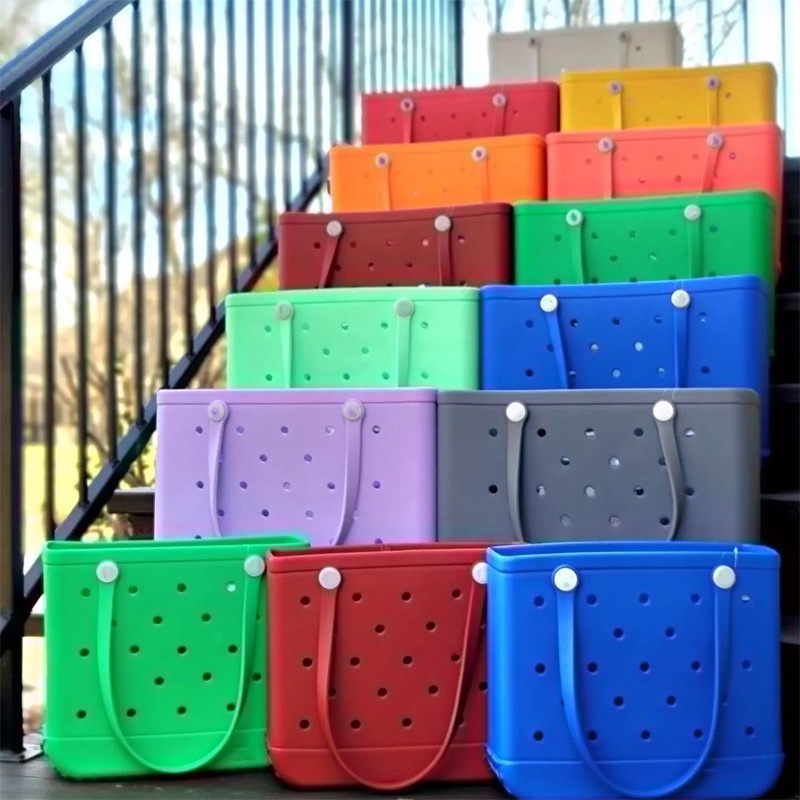
Compartment design should begin with the user's actual storage needs rather than adding features without a clear purpose. Too many sections can reduce the main storage space, increase weight, and make cleaning more difficult.
Important design considerations include:
Bag capacity: Check how much space remains after the compartments are added.
Item dimensions: Measure typical phones, bottles, sunglasses cases, and other intended contents.
Accessibility: Make frequently used items easy to reach.
Cleaning: Avoid unnecessary narrow gaps where sand, sunscreen, or moisture can collect.
Structural strength: Check whether dividers and attachment points can withstand repeated use.
Weight: Consider how additional material or hardware affects carrying comfort.
Water management: Decide whether the compartment should drain, resist splashes, or provide more substantial water protection.
Manufacturing cost: Evaluate the impact of additional tooling, assembly, and quality inspection.
These factors help create a practical design that supports everyday use without making the product unnecessarily complicated.
Developing a custom rubber beach bag generally begins with a product brief. The buyer should explain the target market, intended use, approximate bag dimensions, desired compartments, preferred materials, and expected order volume.
Reference photos, sketches, or simple diagrams can help communicate the desired layout. If the compartments need to hold specific products, providing their dimensions is more useful than describing them only as small or large pockets.
A typical development process may include the following stages:
Requirement confirmation: Define the intended use, bag capacity, compartment count, and material preferences.
Design review: Assess whether the proposed layout is compatible with the material and manufacturing process.
Prototype or sample development: Produce a sample or suitable prototype to check dimensions and usability.
Function evaluation: Test access, stability, cleaning, and the performance of attachment points.
Sample approval: Confirm the final design, color, logo, and construction before bulk production.
Production planning: Establish inspection criteria, packaging details, and delivery requirements.
A custom rubber beach bag manufacturer should explain any design limitations before tooling or production begins. This helps prevent expensive revisions after a mold or production setup has already been completed.
When working with a rubber beach bag factory, buyers should ask questions that clarify both technical feasibility and commercial requirements.
Can the proposed compartments be molded into the main bag body?
Would removable inserts or attached pockets be more practical?
Will the compartment design affect the bag's capacity or weight?
Are new molds or additional tooling required?
Can the manufacturer provide a sample before mass production?
How will the factory inspect the compartment dimensions and attachment strength?
What are the minimum order quantity, sample cost, and production lead time?
It is also helpful to clarify whether the quoted price includes the organizer, additional components, logo application, packaging, and testing. A detailed specification makes quotations easier to compare across suppliers.
A reliable rubber beach bag supplier should be able to explain the production implications of the proposed design instead of simply confirming that every requested feature is possible. Some features may require changes to the mold, additional assembly, or a different material.
Custom compartments can increase manufacturing costs, but the amount depends on the design. A simple removable insert may require limited changes to the main bag, while an integrated molded structure may require a more complex mold and additional engineering work.
Costs may be influenced by mold development, material usage, assembly time, additional components, sample revisions, and inspection requirements. More complex designs can also affect production cycle time and the number of quality checks needed.
To manage costs, buyers should prioritize the compartments that provide the most value to the target customer. A well-planned layout with two or three useful sections may be more practical than a complicated design with many small pockets.
It is advisable to confirm the design and approve a sample before placing a bulk order. This reduces the risk of discovering usability or construction problems after production has started.
Yes, depending on the material and construction. A bag may combine a molded outer body with separate fabric or mesh organizers. The attachment method and compatibility of the materials should be evaluated during development.
They can be suitable for wholesale products when the added functionality matches customer demand and the production cost fits the target price. Buyers should confirm minimum order quantities and sample requirements with the supplier.
Yes. Compartment dimensions can often be adjusted to suit specific accessories, bottles, phones, or other belongings. The final dimensions must be checked against the bag's overall capacity and manufacturing limitations.
Yes. Sample approval allows buyers to check the compartment layout, materials, dimensions, logo placement, and general usability before committing to mass production.
Rubber beach bags can include custom compartments through integrated molding, removable organizers, attached fabric or mesh pockets, and dedicated accessory holders. The best approach depends on the material, desired functionality, production method, and target cost.
For brands and wholesale buyers, the most effective process is to define the storage requirements clearly, review the design with a qualified manufacturer, and evaluate a sample before bulk production. Working with an experienced rubber beach bag supplier can help turn a compartment concept into a practical product while balancing usability, durability, and manufacturing efficiency.



Mobile: +86-135-3230-8701
E-mail:DGluneng001@njdbj.com
Add: 202, Building 1, No. 3, Huangjiang North Bank Fourth Road, Dongguan, Guangdong, China
© 2026 Dongguan Lvneng Rubber And Plastic Products Co., Ltd. All rights reserved.
Privacy policy | Terms and Conditions